
Imagine the following scenario: Your council officer receives the same housing benefit question for the fifth time this morning. Somewhere in the organisation, a policy document addresses this precisely. But locating it requires searching through SharePoint folders, checking email attachments, and possibly ringing the policy team. Thirty minutes later, the officer finds the answer. Meanwhile, four more citizens are still waiting on hold.
This scenario repeats itself thousands of times daily across government departments and local authorities. The cost isn't merely operational inefficiency; it's citizen frustration, staff burnout, and public sector organisations struggling to meet service expectations with constrained budgets. Research from the National Audit Office indicates that whilst 70% of government bodies are piloting AI use cases, widespread adoption remains limited. However, the potential value is substantial: Public First estimates that generative AI could create over £400 billion annually for the UK economy by 2030, with significant benefits concentrated in public services.
AI in the public sector represents more than technological advancement. It's a practical response to structural challenges that traditional approaches cannot solve.
Public sector knowledge management faces distinct challenges that differ substantially from private sector environments. Understanding these structural issues clarifies why AI knowledge platforms prove particularly valuable for government applications.
Fragmented information across departments represents perhaps the most persistent impediment to effective service delivery. Housing information resides in one system. Council tax data lives elsewhere. Benefits guidance sits in a separate repository. When citizens contact councils with questions spanning multiple services, frontline staff must navigate this fragmentation whilst the caller waits. Research published in the Public Administration Review identifies this siloing as a primary barrier to knowledge management effectiveness in government.
The complexity extends beyond mere technical integration. Different departments use varying terminology, maintain inconsistent update cycles, and apply divergent quality standards. A housing officer's understanding of "priority need" may differ from how benefits teams interpret the same term. Without unified knowledge management systems, these inconsistencies proliferate, creating confusion for both staff and citizens.
High volumes of repetitive citizen queries consume substantial staff time. According to studies on government knowledge management, 12% improvements in service delivery efficiency result from implementing proper knowledge systems. Many queries involve straightforward policy clarifications, document requirements, or procedural guidance. Information exists; the challenge is making it accessible quickly and consistently.
Traditional approaches required citizens to ring helplines, wait on hold, speak with staff members, and hope they reached someone familiar with their specific query. If not, the call got transferred, often multiple times. This process frustrates citizens whilst consuming staff capacity that could address more complex cases requiring human judgement and discretion.
Manual, time-intensive knowledge updates create lag between policy changes and frontline awareness. When regulations shift or new guidance emerges, updating all relevant documentation, training materials, and staff knowledge represents a significant undertaking. During the interim, inconsistent information circulates. Some staff operate from outdated guidance whilst others apply new procedures, creating postcode lottery effects that undermine public trust.
The manual nature of knowledge management also means valuable institutional knowledge often resides in individual staff members' experience rather than documented, accessible formats. When experienced employees retire or move roles, this knowledge disappears. The UK Statistics Authority research highlights that public sector managers recognise AI's potential to preserve and disseminate this institutional knowledge more effectively.
Inconsistent answers provided by different teams erode citizen confidence. One person rings about parking permits and receives clear guidance. Their neighbour contacts the same council about an identical situation and gets contradictory information. These inconsistencies aren't intentional; they reflect the difficulty of maintaining knowledge consistency across distributed teams without robust systems.
Pressure to improve transparency and access to information continues intensifying. Citizens increasingly expect government services to match the digital experiences provided by private sector organisations. Research from the Tony Blair Institute indicates that public attitudes towards AI in government remain cautious, with 60% favouring careful integration that protects jobs. However, 41% are comfortable with AI handling administrative tasks to reduce costs and improve efficiency.
These challenges are structural, not personnel-related. Frontline staff work diligently within systems that make knowledge access unnecessarily difficult. Solving these systemic issues requires technology designed specifically for public sector knowledge management needs.

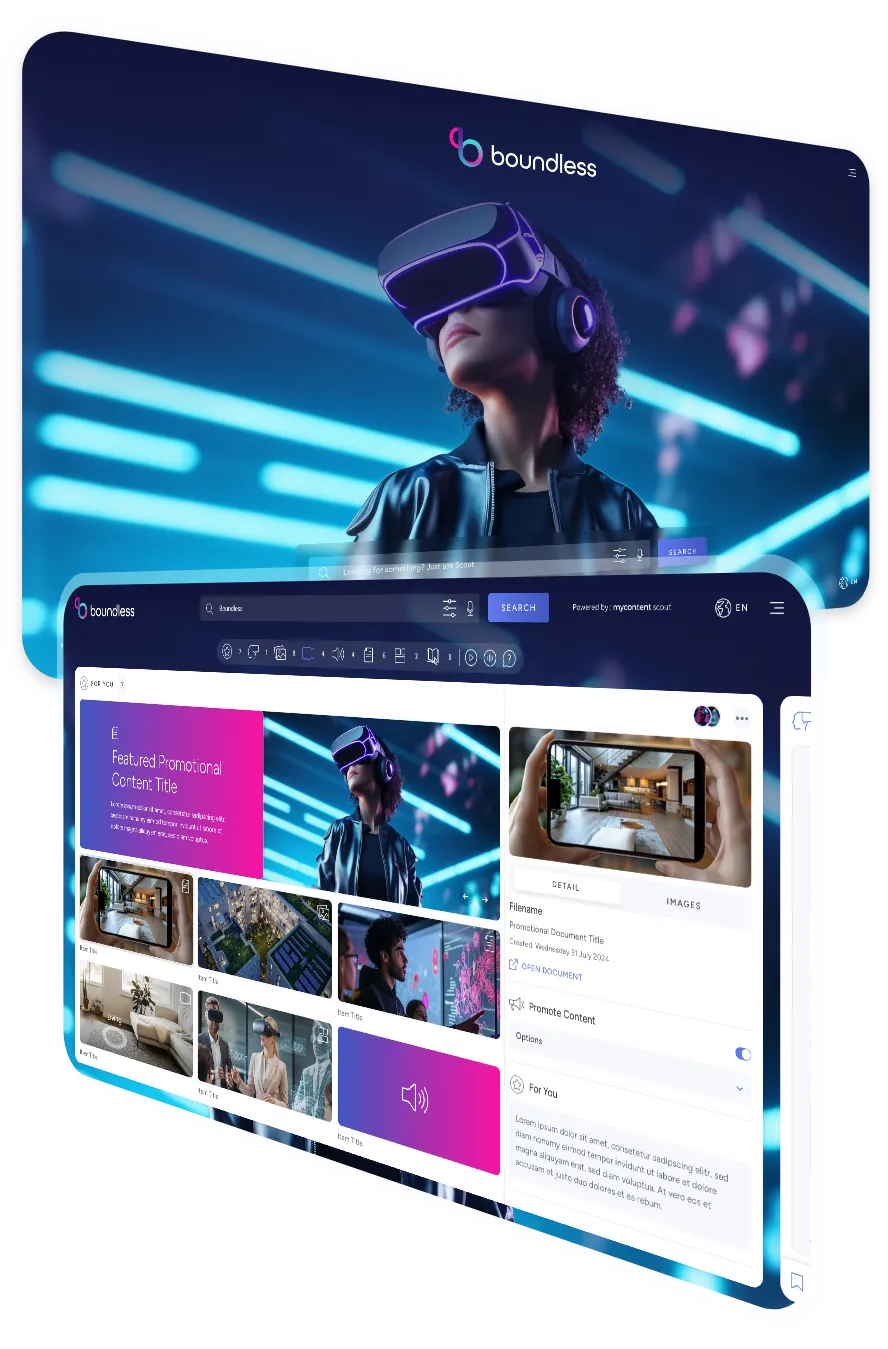
Government AI solutions like MyContentScout address knowledge management challenges through capabilities purpose-built for public sector environments. These platforms aren't generic chatbots; they're comprehensive systems that transform how organisations capture, maintain, and disseminate knowledge to both internal teams and citizens.
A centralised, searchable knowledge base consolidates fragmented information into a unified platform. Rather than hunting through departmental drives, email archives, and various systems, staff access all relevant knowledge through a single interface. Citizens benefit equally, with self-service portals that provide immediate access to accurate, up-to-date information without requiring staff intervention.
This centralisation extends beyond mere technical aggregation. The platform maintains connections between related information, understands policy hierarchies, and surfaces relevant context automatically. When staff search for housing benefit guidance, the system presents not just the primary policy document but related FAQs, recent updates, and relevant case examples.
Natural language search for staff and citizens eliminates the need to master complex search syntax or understand organisational filing systems. Staff simply ask questions as they naturally would: "What documents does someone need for a blue badge application?" Citizens searching self-service portals use their own language: "How do I apply for help with my rent?" The AI understands intent, interprets context, and delivers relevant results regardless of exact phrasing.
This capability proves particularly valuable for public sector organisations serving diverse populations. Not everyone uses identical terminology. Different communities may refer to the same services using varying language. Natural language processing ensures everyone can find information regardless of how they phrase their queries.
AI-powered query routing and summarisation enhances both staff efficiency and citizen experience. When queries arrive through digital channels, the system analyses them, determines appropriate responses, and either provides direct answers from the knowledge base or routes complex queries to appropriate specialists. Research indicates that Deloitte estimates automation could save up to 1.2 billion federal hours annually, translating to potential savings of £41.1 billion per year.
Summarisation capabilities prove equally valuable. Rather than presenting citizens with lengthy policy documents, the platform extracts relevant sections and presents concise, actionable guidance. Staff viewing complex cases receive summarised histories that highlight key information without requiring them to read complete file histories.
24/7 self-service access to trusted information transforms service delivery timelines. Citizens no longer need to wait for office hours or spend time on hold. They access information whenever convenient, receiving immediate, accurate responses. For straightforward queries, this eliminates the need for staff contact entirely. For complex matters, citizens arrive at conversations with staff already informed about basics, allowing discussions to focus on their specific circumstances.
The platform's ability to handle routine queries automatically has substantial implications. Local Government Association research demonstrates that 95% of English councils are using or exploring AI, with generative AI being the most commonly adopted type at 83%. This widespread interest reflects recognition that self-service capabilities deliver measurable value.
Reduced frontline workloads enable staff to concentrate on complex cases requiring human judgement, discretion, and empathy. Rather than spending hours answering routine questions that AI can handle, staff focus on vulnerable citizens needing additional support, complex cases involving multiple services, and situations requiring creative problem-solving.
This redistribution of work doesn't eliminate jobs; it enhances them. Frontline staff report greater satisfaction when they spend time on meaningful interactions rather than repetitive information provision. Citizens benefit from staff who have capacity to listen, understand context, and provide thoughtful guidance rather than rushing through calls to manage queue lengths.
The dual benefits prove transformative: staff become more effective and satisfied whilst citizens receive faster, more consistent service.
Consider a district council that implemented an AI knowledge platform to address persistent challenges with housing benefit queries. Previously, their housing benefits team fielded approximately 3,500 queries monthly, with roughly 60% involving routine questions about eligibility criteria, required documentation, and application procedures.
The problem extended beyond volume. Response times varied significantly depending on staff availability and expertise. New team members required months to develop comprehensive knowledge of housing benefit policies, during which their responses lacked the depth and accuracy of experienced colleagues. Peak periods (month-end, following policy changes) created backlogs that extended wait times to unacceptable levels. Citizens complained about inconsistent information, noting that different staff members sometimes provided contradictory guidance.
The solution involved implementing MyContentScout trained on complete housing benefit policies, internal guidance documents, frequently asked questions, and historical case examples. The platform integrated with existing systems, accessing real-time policy information and maintaining synchronisation as regulations changed.
For citizens, the council deployed a self-service portal where queries could be submitted in natural language. The AI analysed each question, determined whether it required human involvement, and either provided complete answers directly or gathered relevant information before routing to appropriate staff members. For staff, the platform functioned as an intelligent knowledge assistant, instantly retrieving relevant policies, procedures, and precedents.
The outcome proved substantial across multiple dimensions. Inbound call volumes decreased by approximately 40% as citizens found answers through self-service channels. Email queries that previously required staff research and responses now received instant, accurate answers automatically. Most significantly, response consistency improved dramatically. Whether queries arrived via phone, email, or web portal, citizens received identical information based on current policy.
Staff capacity shifted noticeably. Rather than spending hours on routine information provision, team members concentrated on complex cases: citizens with unusual circumstances, applications requiring discretionary decisions, and vulnerable residents needing additional support. New staff members became productive faster, using the AI platform as a training tool that provided instant access to policy knowledge that previously required months to acquire.
Processing times for complex applications improved as staff could quickly retrieve precedents for unusual situations, access complete policy context, and make informed decisions without lengthy research. Quality assurance improved simultaneously; supervisors could verify that staff applied policies consistently using the same knowledge base accessed by the AI system.
Citizen satisfaction metrics improved measurably. Feedback indicated appreciation for immediate responses, clear explanations, and consistency across channels. Complaints about contradictory information declined sharply. Citizens particularly valued the ability to access information outside office hours without waiting until the next working day.
Financial implications proved equally compelling. Whilst the platform required investment, reduced call handling costs, improved staff productivity, and faster case processing delivered return on investment within eighteen months. More significantly, the council could maintain service quality despite budget constraints that precluded additional hiring.

Public sector AI deployment demands higher standards for transparency, accountability, and governance than private sector applications. Citizens and regulatory bodies rightly expect government AI systems to operate within robust ethical frameworks that prioritise fairness, explicability, and appropriate human oversight.
Importance of explainability and auditability cannot be overstated in government contexts. When AI systems inform decisions affecting citizens' benefits, housing, or services, those citizens deserve to understand how decisions were reached. Regulators require audit trails demonstrating that AI recommendations align with policy and don't perpetuate biases. Public sector AI knowledge platforms must provide clear explanations for every answer, citing specific policy sources and documenting reasoning.
MyContentScout and similar platforms designed for government use maintain comprehensive audit logs. Every query, response, and information source gets recorded. When questions arise about why specific guidance was provided, administrators can trace back through complete decision chains. This auditability proves essential for regulatory compliance, quality assurance, and continuous improvement.
Controlled access to sensitive information addresses legitimate concerns about data security and privacy. Not all government information is public. Some knowledge bases contain sensitive policy deliberations, personal data, or security-related guidance that must remain restricted. AI platforms serving government must implement granular access controls ensuring that citizens, frontline staff, managers, and specialists each access only appropriate information.
GDPR compliance represents a fundamental requirement. Public authorities must appoint Data Protection Officers, implement appropriate technical and organisational measures, and ensure that any AI processing of personal data meets strict standards. The European Commission guidance emphasises that public administrations face specific obligations regarding lawfulness, transparency, and data minimisation.
Human-in-the-loop governance ensures AI recommendations support rather than replace human judgement. Particularly for sensitive matters like benefits eligibility, safeguarding concerns, or enforcement decisions, AI provides information and analysis whilst humans make final determinations. This approach aligns with public expectations; Ipsos research demonstrates that 52% of Britons prefer human-led systems in sensitive areas like NHS triage, citing trust in human judgement.
Well-designed platforms incorporate approval workflows for significant decisions. Staff can review AI-generated responses before they reach citizens. Supervisors can monitor patterns in AI recommendations, identifying areas where additional training data or policy clarification improves performance. This governance structure builds trust whilst maintaining efficiency gains.
Alignment with data protection and public sector AI ethics reflects evolving regulatory frameworks and public expectations. The UK government's draft strategy for AI adoption in the public sector emphasises responsible, transparent use that improves services whilst maintaining accountability. Platforms serving government must align with these principles from design through deployment.
Practical implementation involves regular bias testing, fairness audits, and impact assessments. Does the AI perform equally well for queries in different languages? Do response patterns disadvantage particular demographic groups? Are vulnerable citizens receiving appropriate support rather than automated responses that might miss nuance? These questions require ongoing evaluation and adjustment.
Clear ownership and content approval workflows maintain knowledge quality and currency. AI platforms amplify existing knowledge; they don't create policy. Government organisations must establish clear processes determining who authors policy content, who reviews and approves it, how frequently it's updated, and when information gets retired. The AI then disseminates this authoritative content consistently.
This governance model preserves appropriate decision-making authority whilst leveraging AI's capability to scale knowledge access. Policy experts retain ownership of content. Department heads approve significant changes. The AI platform ensures this approved content reaches everyone who needs it, consistently and immediately.
Looking forward, digital transformation in government will increasingly centre on AI capabilities that enhance rather than replace public servants. Several trends are emerging that will shape how public sector organisations deploy AI knowledge platforms over the coming years.
Expansion of AI knowledge platforms across departments represents the natural evolution from single-service implementations. Councils that successfully deploy AI for housing benefits recognise value in extending capabilities to planning queries, environmental services, council tax, and other functions. Integrated platforms that span multiple services deliver greater citizen value than siloed implementations.
This expansion enables more sophisticated service orchestration. When citizens' queries touch multiple departments, integrated AI can provide comprehensive guidance drawing from all relevant knowledge bases. Rather than citizens navigating complex organisational structures, the AI handles integration behind the scenes.
Integration with case management systems will transform how staff work with AI knowledge platforms. Rather than switching between separate systems for knowledge lookup and case processing, integrated environments present relevant knowledge contextually within case workflows. When processing applications, staff see pertinent policies and procedures automatically, reducing errors and accelerating decisions.
This integration extends to predictive capabilities. AI analysis of historical cases can flag potential issues requiring additional scrutiny, suggest relevant precedents, and guide staff through complex decisions. The platform becomes an intelligent assistant embedded throughout work processes rather than a separate tool requiring conscious invocation.
Multilingual and accessibility-driven AI services will ensure equitable access for diverse populations. Current implementations primarily operate in English, but communities include non-native speakers, those with visual impairments, learning difficulties, or other accessibility requirements. Next-generation platforms will provide seamless translation, text-to-speech capabilities, simplified language options, and interfaces designed for varying accessibility needs.
This expansion isn't merely technical accommodation; it's a fundamental commitment to equitable service delivery. Government serves everyone, and AI platforms must reflect this principle through inclusive design.
AI-assisted policy interpretation and internal guidance will help staff navigate increasingly complex regulatory environments. Policy documents grow longer and more intricate. Staff cannot possibly memorise every provision, exception, and interaction effect. AI platforms that can interpret policy in context, explain implications for specific circumstances, and guide staff through decision trees become invaluable tools for maintaining quality and consistency.
These capabilities prove particularly valuable during policy transitions. When regulations change, AI platforms updated with new guidance can immediately assist staff understanding how changes affect various scenarios, reducing confusion and implementation delays.
Shift from reactive service models to proactive public engagement represents perhaps the most transformative potential. Rather than waiting for citizens to contact them with queries, councils could use AI analysis of patterns to identify emerging issues, proactively publish clarifying guidance, and reach out to affected populations before problems escalate. This shift from reactive to proactive service delivery requires sophisticated AI capabilities but offers substantial improvements in citizen outcomes.
.webp)
The evidence from early adopters demonstrates conclusively that AI knowledge platforms deliver measurable value for public sector organisations. However, success requires approaching implementation thoughtfully, with clear understanding that AI empowers rather than replaces public servants.
Current adoption patterns indicate momentum. The Local Government Association reports that 95% of councils are using or exploring AI, a 10% increase from 2024. Half describe themselves as beginning their AI journey, whilst 7% position themselves as leaders. This widespread interest reflects recognition that knowledge management challenges demand technological solutions.
Financial constraints facing public sector organisations make efficiency gains increasingly critical. However, efficiency must balance with service quality, equity, and public trust. AI knowledge platforms, when implemented with appropriate governance and human oversight, deliver this balance. They reduce costs whilst improving service consistency, accessibility, and responsiveness.
Importantly, these platforms represent practical, low-risk entry points for public sector AI adoption. Unlike some AI applications that carry significant risk of algorithmic bias or safety concerns, knowledge management platforms amplify existing information without autonomous decision-making. They operate within clear boundaries, disseminating approved content to appropriate audiences. This controlled scope makes them suitable for organisations building AI capability and confidence.
The technology landscape continues evolving rapidly. Platforms improve constantly, incorporating more sophisticated natural language processing, better integration capabilities, and enhanced analytics. Public sector organisations beginning AI adoption today position themselves to leverage these improvements whilst building internal expertise and stakeholder confidence.
However, technology deployment must accompany organisational readiness. Strong data governance, clear content ownership, robust approval workflows, and comprehensive staff training all prove essential. Public sector organisations considering AI knowledge platforms should assess these foundational elements alongside technical requirements.
At The Virtual Forge, we work with public sector organisations implementing AI knowledge platforms that deliver measurable service improvements whilst maintaining the transparency, accountability, and public trust that government requires. Our approach combines technical expertise with deep understanding of public sector operational requirements, governance frameworks, and stakeholder dynamics.
We recognise that government AI deployment faces constraints and expectations that differ substantially from private sector implementations. Procurement processes, regulatory compliance, public scrutiny, and resource limitations all shape what's feasible and appropriate. Our experience navigating these factors ensures implementations succeed within public sector realities rather than theoretical ideals.
If you're exploring how AI knowledge platforms could support your organisation's service delivery, we're here to help. Our team can assess current knowledge management challenges, evaluate platform options suited to public sector requirements, design implementation approaches that balance ambition with practical constraints, establish governance frameworks ensuring transparency and accountability, and provide ongoing support as capabilities mature and expand.
Interested in exploring how an AI knowledge platform could support your public service teams and citizens? Get in touch to discuss a compliant, trusted AI approach tailored for the public sector.





Get in touch with our team to arrange a demo of MyContentScout and see how it could transform your workflow with AI search, content analysis and categorisation, saving you time and providing smart insights from various sources.