
Pick up The Canterbury Tales and attempt to read Chaucer's original Middle English. "Whan that Aprill with his shoures soote" sounds almost foreign, yet it's English from merely 600 years ago. Language transforms continuously, shaped by everything from the printing press to television, from migration patterns to the internet. Now, as millions interact daily with AI assistants, chatbots, and knowledge platforms, a question emerges: will communicating with AI standardise the way we speak?
Research published in EDUCAUSE Review explores how artificial intelligence might have wide-ranging effects on the evolution of English language and, in turn, on education, communication, and global knowledge sharing. The article notes that in an increasingly interconnected world, English has long been the global lingua franca, bridging diverse cultures and disciplines. But as we stand on the cusp of the AI era, we must consider how this universal language might evolve or be revolutionized in coming years.
The thesis proves nuanced: AI may accelerate communication changes, but it won't erase cultural identity. Rather, it transforms how we access and share knowledge across linguistic boundaries.

Geographic separation historically shaped dialects. Communities isolated by mountains, oceans, or political borders developed distinct pronunciation patterns, vocabulary, and grammatical structures. Yorkshire English diverged from Cornish English. Australian English split from British English. American regional dialects multiplied across a vast continent.
Technology consistently reshaped these patterns. The printing press standardised spelling, reducing but not eliminating regional variation. Radio exposed millions to broadcasters' accents, creating perceived "standard" pronunciation. Television amplified this effect, with network English influencing viewers nationwide. The internet compressed distances further, enabling real-time communication across continents and exposing users to diverse linguistic patterns simultaneously.
Globalisation compressed not just distances but linguistic evolution timelines. Where accent shifts previously required generations, now they occur within decades as international business, education, and entertainment create common reference points. Yet despite these homogenising forces, accents persist. Londoners still sound distinctly different from Mancunians. Texans maintain patterns distinguishing them from Californians.
Research in The Modern Language Journal examines how human cognition and language co-evolved, noting that cultural and linguistic evolution influenced brain structure, which enabled more complex cultural and linguistic abilities. This co-evolutionary process created profound diversity in human communication, diversity that proves remarkably resilient despite technological change.
AI represents the next stage in this ongoing evolution. Rather than ending accents, it changes how we navigate linguistic diversity in global contexts.
AI does not eliminate accents; it reduces misunderstanding. This distinction proves critical for understanding AI's actual role in linguistic evolution rather than feared dystopian standardisation.
In global workplaces, clarity matters more than uniformity. International teams need members from different regions to understand each other quickly and accurately. Traditional solutions involved language training (expensive and time-consuming), relying on bilingual staff (limited scalability), or accepting communication friction (productivity-destroying). Each approach had significant limitations.
AI tools enable genuinely new capabilities. Cross-border collaboration proceeds smoothly when AI handles translation and clarification in real-time. Teams communicate faster because linguistic barriers decrease without requiring individual linguistic mastery. Communication friction reduces as AI bridges gaps between accents, dialects, and languages that previously impeded understanding.
Nature Research Intelligence notes that the study of language evolution and learning addresses complex interplay between cultural dynamics and biological predispositions in shaping human communication. Researchers employ experimental paradigms, computational models, and field studies to investigate how linguistic structures emerge, adapt, and transform over time. This interdisciplinary perspective reveals that language evolution involves far more than simple standardisation; it's continuous negotiation between innovation and tradition, efficiency and identity.
Importantly, AI translation and communication tools don't require speakers to modify their accents. They accept diverse inputs and make them mutually comprehensible. A Scottish engineer speaks naturally to Scottish colleagues. When collaborating with Japanese partners, AI bridges the gap without requiring either party to abandon their linguistic identity.

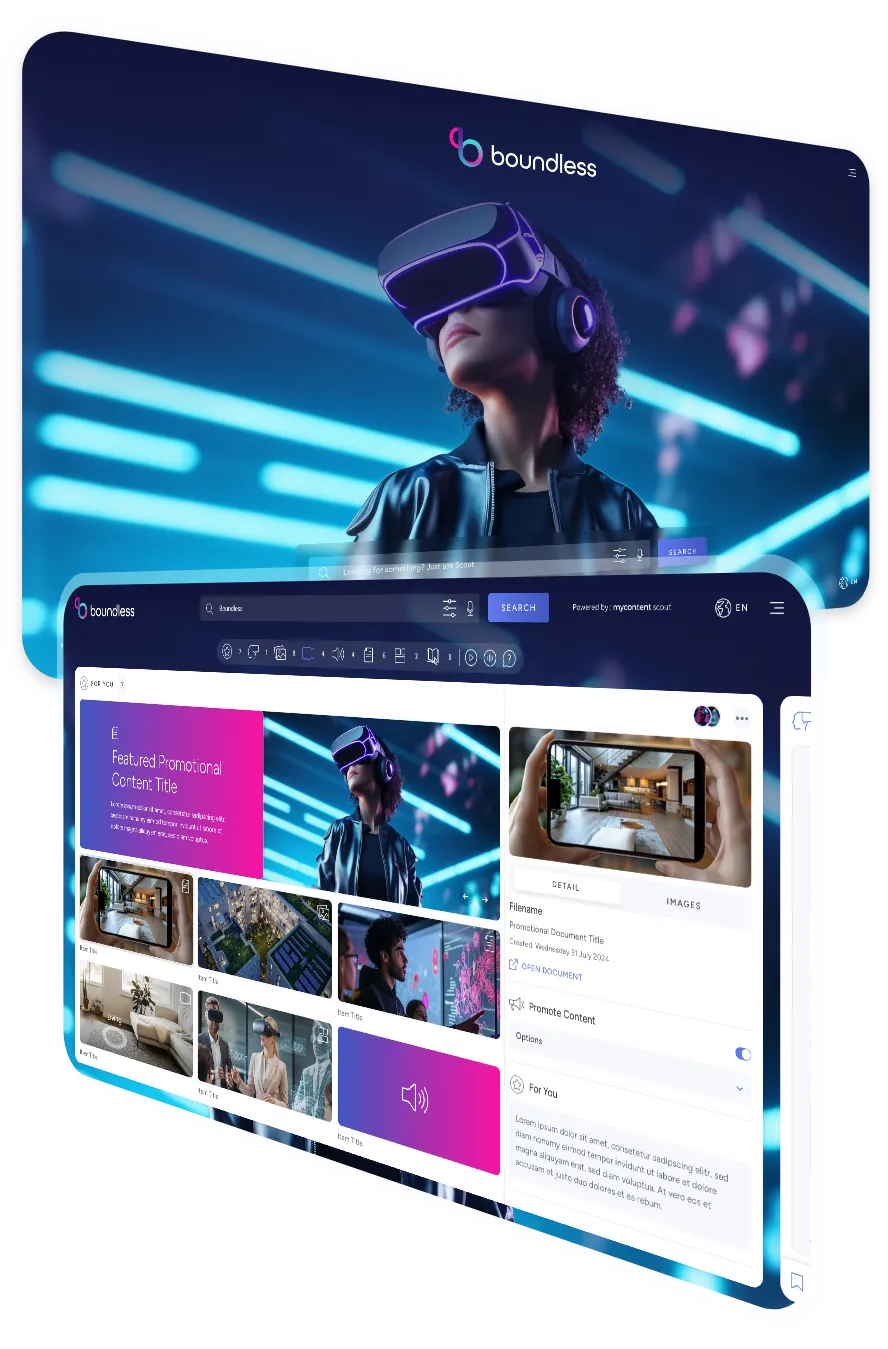
This is where MyContentScout enters the picture as fundamentally different from public AI platforms. MyContentScout is an enterprise knowledge management platform that uses AI to search, retrieve, and summarise only your organisation's content.
Critical distinctions matter enormously for enterprise knowledge management. MyContentScout does not pull answers from the public internet. It does not rely on generic external datasets trained on millions of unvetted sources. It works exclusively with your internal documents, videos, SOPs, manuals, and knowledge repositories. Your data remains secure and permission-controlled within your organisational boundaries.
This architecture addresses legitimate enterprise concerns about data security, intellectual property protection, and regulatory compliance. Rather than exposing proprietary information to public AI systems, organisations maintain complete control whilst gaining AI-powered accessibility.
The platform's features enable teams to query organisational knowledge in natural language regardless of their linguistic background, receive answers drawn exclusively from approved internal sources, maintain audit trails showing exactly which documents informed each response, and ensure permissions limit access appropriately.
This matters particularly for multinational enterprises where English might be the business language but not every employee's first language. MyContentScout allows all employees to access organisational knowledge effectively whilst maintaining security boundaries appropriate for enterprise operations.
The truly powerful capability MyContentScout provides addresses one of globalisation's persistent challenges: making organisational knowledge accessible across language boundaries without creating translation bottlenecks.
Traditional approaches required translating every document into every language employees might need. This proved expensive, time-consuming, and practically impossible to maintain as content updated. Documents existed in English whilst Spanish-speaking employees waited for translations. German engineers couldn't access Japanese technical documentation. French compliance teams lacked current English policy updates.
MyContentScout enables fundamentally different workflows. Teams can ask questions in English and receive answers from French documents, query in German and retrieve information from English videos, pose questions in Portuguese and access insights from Spanish podcasts, or search in Mandarin and find relevant content from Italian technical manuals.
The platform understands context across languages whilst keeping your internal knowledge secure. It doesn't require perfect translation of every document. Instead, it understands content regardless of source language and presents relevant information to users in their preferred language. Discover how AI-powered search is closing the gap between content and users in multilingual enterprise environments.
This isn't removing accents; it's removing barriers between them. A Brazilian engineer maintains her Portuguese linguistic identity whilst accessing English technical documentation seamlessly. A French manager asks questions naturally in French whilst retrieving insights from German operational reports. The organisation preserves linguistic diversity whilst eliminating the productivity friction that diversity traditionally created. Learn more about multilingual AI search and collaborating across languages without barriers.
For enterprises evaluating the ROI of multilingual knowledge platforms, the savings prove substantial. Eliminate translation backlogs, reduce time wasted searching inaccessible documentation, and improve decision-making speed when information crosses linguistic boundaries.
The nuanced reality emerging combines seemingly contradictory truths. Regional accents will remain. People maintain linguistic identities connected to geography, culture, and community. These patterns persist despite globalisation because language connects to identity at fundamental levels. Cultural speech patterns will continue evolving as they always have, influenced by technology but not erased by it. AI won't standardize humanity because standardisation isn't actually AI's function or effect.
However, in business contexts, clearer global communication measurably improves performance. When multinational teams understand each other instantly, projects accelerate. When employees access critical knowledge regardless of source language, decisions improve. When communication friction decreases, productivity increases. Multilingual knowledge access drives efficiency that translates directly to competitive advantage. AI reduces barriers without removing individuality.
Research published in EDUCAUSE notes that whilst the comparison between AI-improved English and Orwell's Newspeak might seem far-fetched, both represent forms of engineered language change. However, whereas Newspeak aimed to limit thought, AI-improved language could expand expressive capabilities. The power to shape language evolution is partially ceded to AI systems, raising questions about control and intentionality in language development.
These questions merit serious consideration. Yet evidence suggests AI functions more as enabler than homogeniser. Rather than forcing users toward standard patterns, effective AI systems accommodate diversity whilst making it practically navigable.
For enterprises, this means implementing knowledge platforms like MyContentScout that respect linguistic diversity whilst eliminating the productivity costs that diversity previously imposed. The platform doesn't require employees to abandon regional accents or native languages. It simply ensures linguistic differences don't prevent people from accessing the knowledge they need to perform effectively.
Language evolves naturally, shaped by technology, culture, migration, and countless other forces. Chaucer's Middle English transformed into modern English not through deliberate standardisation but through centuries of natural evolution influenced by printing presses, dictionaries, mass media, and global communication.
AI accelerates information access without dictating linguistic conformity. The technology makes knowledge findable, translates between languages, and clarifies ambiguity. These capabilities prove enormously valuable for global business operations. Yet they don't require abandoning linguistic identity.
Identity and diversity remain because language connects to culture, community, and individual expression at levels far deeper than mere communication efficiency. People maintain accents that mark them as Glaswegian or Texan or Singaporean because these patterns signal belonging and identity. Technology that increases global communication efficiency doesn't override these fundamental human needs.
MyContentScout exemplifies this balanced approach. The platform enables global teams to access trusted knowledge instantly, in any language, whilst being powered entirely by their own secure organisational content. Rather than forcing linguistic standardisation, it makes diversity practically manageable. Rather than erasing accents, it ensures accents don't prevent understanding.
For enterprises operating across borders, managing distributed teams, or serving international markets, this capability transforms operations. Explore pricing options for enterprise deployments or discover how multilingual knowledge platforms support specific industries.
The future of language will continue evolving as it always has. AI joins this evolution not as homogenising force but as connective tissue enabling mutual comprehension whilst preserving the rich diversity that makes human communication fundamentally interesting.
Discover how MyContentScout enables secure, multilingual knowledge access across your enterprise, powered entirely by your own organisational content, connecting teams worldwide without erasing the linguistic diversity that enriches global collaboration.





Get in touch with our team to arrange a demo of MyContentScout and see how it could transform your workflow with AI search, content analysis and categorisation, saving you time and providing smart insights from various sources.