
Most businesses treat the search bar as a convenience feature.
You build a knowledge base, attach a search function, and move on. Someone needs a policy document? They search for it. Job done.
But there is a far more important question sitting underneath that interaction.
Why did they need to search for it in the first place?
That question, asked consistently across every search your team ever makes, is where the real intelligence lives. Your organisation's enterprise search tool is not just a retrieval mechanism. It is a continuous feedback loop. And if you are not reading it, you are leaving a significant strategic advantage on the table.
Think about what it means when the same question is searched repeatedly.
A new starter searches "how to submit an expense claim." Fine - they are new. But if that same query appears week after week from employees who joined months ago, you have an onboarding problem, not a search problem. The training did not land. The documentation is unclear. Or the process itself is poorly communicated.
Now scale that insight across every department in your business.
When teams repeatedly search for the same procedures, it means those procedures are not embedded in the way people work. When sales staff search for the same product specification sheets before every client call, it means your content management strategy is not surfacing that content proactively. When customer service agents search for resolution steps that should be second nature, it means your knowledge base is structured in a way that does not match how those agents actually think.
These are not technical failures. They are organisational ones. And the search bar is where they reveal themselves.
The most direct thing employee search behaviour tells you is whether your content actually covers what people need.
Searches that return no results are the clearest possible sign of a content gap. Someone needed something, typed it in, and came up empty. If that happens once, it might be a fringe query. If it happens forty times in a month, you have a genuine gap in your knowledge resources, and people are quietly finding workarounds, asking colleagues, or simply going without.
Zero-result searches should be treated the same way a product team treats a feature request. They are user-generated requirements. They are telling you, precisely and unprompted, what is missing.
But the more nuanced signal comes from searches that do return results, and still get refined repeatedly. When someone searches "annual leave policy," then immediately searches "annual leave request form," then "how many days annual leave," that sequential pattern tells you something important: the first result answered none of their actual questions. The content exists, but it is not structured around how people think.
One of the hardest things about identifying training needs is that employees are often the last people to raise them. No one wants to admit they do not know how to do their job.
Search data removes that barrier entirely.
When a cluster of employees consistently searches for help with a specific system, process, or regulation, you do not need a survey or a manager's observation to identify the gap. The data already shows it. The repeated query for "how to process a refund in [system name]" is not just a sign that the help documentation is poor. It is a signal that the original training on that system did not stick, or was never adequate to begin with.
According to Deloitte's research on knowledge management, 75% of organisations say creating and preserving knowledge across evolving workforces is important or very important for success, yet only 9% say they are truly ready to address it. That gap between intent and readiness is precisely where search pattern analysis can help, not by replacing L&D strategy, but by making it sharper and more targeted.

Beyond content and training, search behaviour maps the friction points inside your operations.
When a department consistently searches for information that should be in their standard operating procedures, it often means those procedures are either inaccessible, outdated, or stored somewhere that does not match the tools those employees actually use day-to-day.
Consider the broader scale of this problem. Research from McKinsey Global Institute found that knowledge workers spend roughly one in every five working hours searching for and gathering information. That is the equivalent of one full working day, every single week, spent hunting rather than doing. The searches your team makes are part of that cost and each one is a breadcrumb pointing back to a process that has not been made clear enough, documented well enough, or placed where people naturally look.
The operational insight is not just about volume. It is about concentration. When a specific team generates a disproportionate share of searches around a particular topic, that cluster tells you where a process is breaking down, where handover documentation is weak, or where tacit knowledge is trapped inside a few individuals rather than accessible to the whole team.
That last point matters considerably. When knowledge lives in people rather than systems, it is fragile. It leaves when those people leave. Distributed knowledge that should be institutional gets treated as personal, and search data can expose exactly where this is happening.
There is one more category of insight that search data uniquely provides, and it is perhaps the most strategically valuable of all.
It is the question your team does not feel comfortable raising directly.
In meetings, in performance reviews, in training sessions, employees generally ask the questions they feel safe asking. But in a search bar, they ask what they actually need to know. There is no social cost to typing a query into a box. No risk of looking uninformed. No awkwardness.
That means search behaviour captures real need rather than presented competence. It shows the gaps that exist regardless of whether they have been acknowledged. And for businesses trying to understand knowledge access problems across their organisation, that unfiltered signal is extraordinarily valuable.
The aggregate picture painted by weeks or months of search queries is, effectively, an honest map of where your organisation's knowledge infrastructure is failing the people who rely on it.
The shift required here is not a technical one. It is a mindset change about what the search bar actually is.
It is not just a way to find files. It is a diagnostic tool. A continuous audit of whether your content strategy, your onboarding, your documentation, and your operational clarity are working as intended.
Businesses that treat knowledge management as a strategic priority, not just an IT function, are the ones that start asking different questions. Not just "can our people find information?" but "what does the pattern of their searching tell us about what we have built?"
That reframe leads to better content, stronger training programmes, more resilient processes, and a clearer picture of where institutional knowledge is at risk.
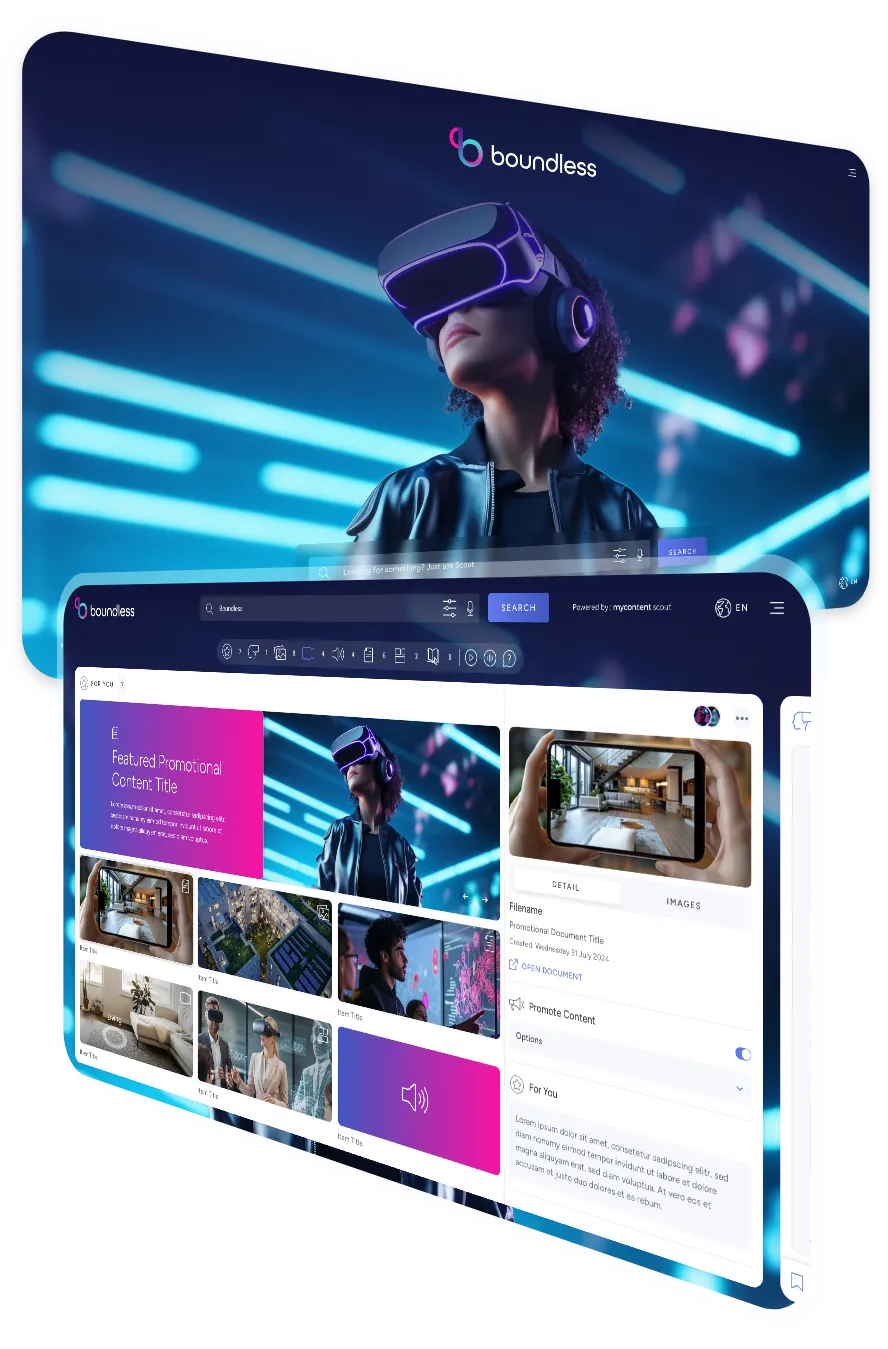
Scout is built with exactly this in mind. By enabling teams to find answers instantly and efficiently, it also captures the intelligence embedded in those searches, turning knowledge access into actionable insight, not just a convenience.
You do not need to overhaul your entire knowledge infrastructure overnight. Start by asking three questions of your existing search data:
What are the most repeated searches, and are they being satisfied effectively? Recurring queries around the same topic point directly to gaps in documentation or process clarity.
What searches return no results at all? These are your content requirements list. Someone in your organisation needed something that does not exist yet.
Which teams or departments generate the most searches around operational processes? These are your friction hotspots, the places where knowledge is not yet embedded in the flow of work.
The answers will not fix themselves. But they will tell you, with more precision than almost any other internal data source, exactly where to focus.
Your search bar already knows what is working and what is missing.
The question is whether you are listening.
Ready to turn your team's questions into business intelligence? See how Scout does it.





Get in touch with our team to arrange a demo of MyContentScout and see how it could transform your workflow with AI search, content analysis and categorisation, saving you time and providing smart insights from various sources.