
There is a moment that almost every new employee knows, even if they have never been able to name it.
The training schedule finishes. The induction sessions wrap up. The onboarding checklist gets signed off. And then, usually without ceremony, you are handed your first real task and left to get on with it.
For most people, this is when the anxiety quietly sets in.
Not because you lack the ability to do the job. Not because you were not paying attention during the sessions. But because the moment structured training ends is also the moment you realise how much of what you need is still locked away somewhere you cannot find it. A process lives in someone's head. A policy document exists, somewhere, in a folder structure that makes no intuitive sense to you. An answer to the question you need right now is apparently common knowledge except nobody told you what it was, or where to look.
This is the knowledge access problem at its most human. And it is one that most organisations are entirely unprepared for.
Onboarding, for most organisations, is primarily a process of information delivery. You attend sessions. You receive documents. You complete modules. The assumption baked into most programmes is that by the time formal training concludes, you will have absorbed what you need to function independently.
That assumption is almost always wrong.
According to Gallup, it typically takes a new employee around 12 months to reach their full performance potential in a role. The average onboarding programme, by contrast, lasts somewhere between one week and three months. That leaves a gap of at least nine months, often longer during which a new starter is expected to operate independently, but has not yet built the experience, the relationships, or the knowledge infrastructure to do so confidently.
What fills that gap is usually other people's time. Specifically, the time of the people who have been there the longest and know the most.
This is not a criticism of new starters. It is a structural problem. When formal guidance ends but genuine independence has not yet arrived, the only route to answers is asking someone. And so they do.

There is a narrative in some organisations that a new hire who asks a lot of questions is somehow not quite capable. They should know this by now. They should have figured it out. They should have read the documentation.
This framing misunderstands the problem entirely.
When a new starter asks a question, they are not demonstrating a lack of capability. They are demonstrating a lack of knowledge access. The knowledge they need almost certainly exists somewhere in the organisation. The problem is that they cannot find it quickly enough to make asking anyone a less attractive option.
This is entirely rational behaviour. If finding an answer takes fifteen minutes of navigating folders, outdated wikis, and ambiguous file names and asking a colleague takes thirty seconds people will ask the colleague every time. The friction is not intellectual; it is structural.
Research from the McKinsey Global Institute found that employees spend an average of 1.8 hours every day searching for and gathering information. For someone new to a role, who does not yet know where to look or what things are called internally, that figure will be considerably higher. The cognitive load of not knowing where to find things is exhausting. It sits in the background of every task, generating a low-level hum of anxiety that experienced employees have long since stopped noticing.
New starters notice it constantly.
The knock-on effect of this knowledge friction is rarely discussed openly, but it is significant.
Every time a new starter asks a question, someone experienced has to stop what they are doing, switch context, answer it, and then find their way back to the task they were working on. Research on cognitive context switching suggests this kind of interruption costs far more time than the interruption itself. The person being asked is not just spending thirty seconds answering; they are spending several minutes recovering their focus afterwards.
Scale that across a team of three new starters, each asking several questions a day, and the invisible tax becomes substantial. It is not resentment most experienced colleagues are genuinely happy to help but it is time that is not available for anything else. Decisions get deferred. Work slows down. And the people being asked most often are, almost by definition, the ones the organisation can least afford to interrupt: the most experienced, the most knowledgeable, the most in demand.
A poor onboarding process has been linked to a 42% rise in manager fatigue when knowledge gaps go unaddressed. That is a real cost, and it compounds quietly over weeks and months.
Most organisations treat the end of the formal onboarding period as the point at which a new starter should be self-sufficient. The reality is very different.
AIHR reports that becoming independently effective in a new role averages six to seven months and that is for employees who received structured, well-supported onboarding. For those whose induction was primarily paperwork and introductory sessions, the timeline stretches further. The 12-month figure from Gallup represents full performance potential, but genuine day-to-day confidence the ability to navigate the role, find what you need, and make decisions without constant reassurance often does not arrive until somewhere between months three and six.
During that entire period, the question-asking continues. The knowledge friction continues. And the team quietly absorbs the cost of it, usually without measuring it or naming it.
What this means in practice is that the end of the onboarding schedule is not the end of the onboarding problem. It is often the beginning of the most challenging phase the phase where the new starter is expected to be independent, but the infrastructure to support that independence has not yet been put in place.

There is a harder consequence to this that organisations frequently underestimate.
The Brandon Hall Group found that organisations with robust onboarding processes improve new hire retention by 82% and productivity by more than 70%. The inverse is equally true: poor onboarding, and specifically the experience of not feeling equipped or supported, is a significant driver of early departure.
Research from Enboarder indicates that 86% of new hires decide how long they will stay with a company within their first six months. That is the same window during which knowledge friction is at its worst. A new starter who spends those months feeling lost, constantly interrupting colleagues, unable to find what they need and quietly embarrassed about it is not forming a strong attachment to the organisation. They are forming a question.
That question is: do I actually belong here?
And when that question is being asked, no job title, salary, or set of company values is as powerful an answer as the simple experience of being able to do your job without constantly feeling stuck.
The organisations that handle this well do not just produce better training content. They build better knowledge infrastructure, the kind that works for someone on day one as well as someone in year five.
Good knowledge access, from a new starter's perspective, looks like being able to ask a question and get an answer without needing to know in advance which folder it lives in, what the internal name for it is, or which colleague holds it in their head. It looks like a knowledge management platform that searches across formats, documents, training videos, process guides, recorded meetings and returns the relevant answer with its source. Not a list of possibly-relevant files to wade through. An actual answer.
It looks like being able to find the maternity policy for a specific office, or the current version of a client proposal process, or the escalation procedure for a particular type of complaint quickly, independently, and without interrupting anyone.
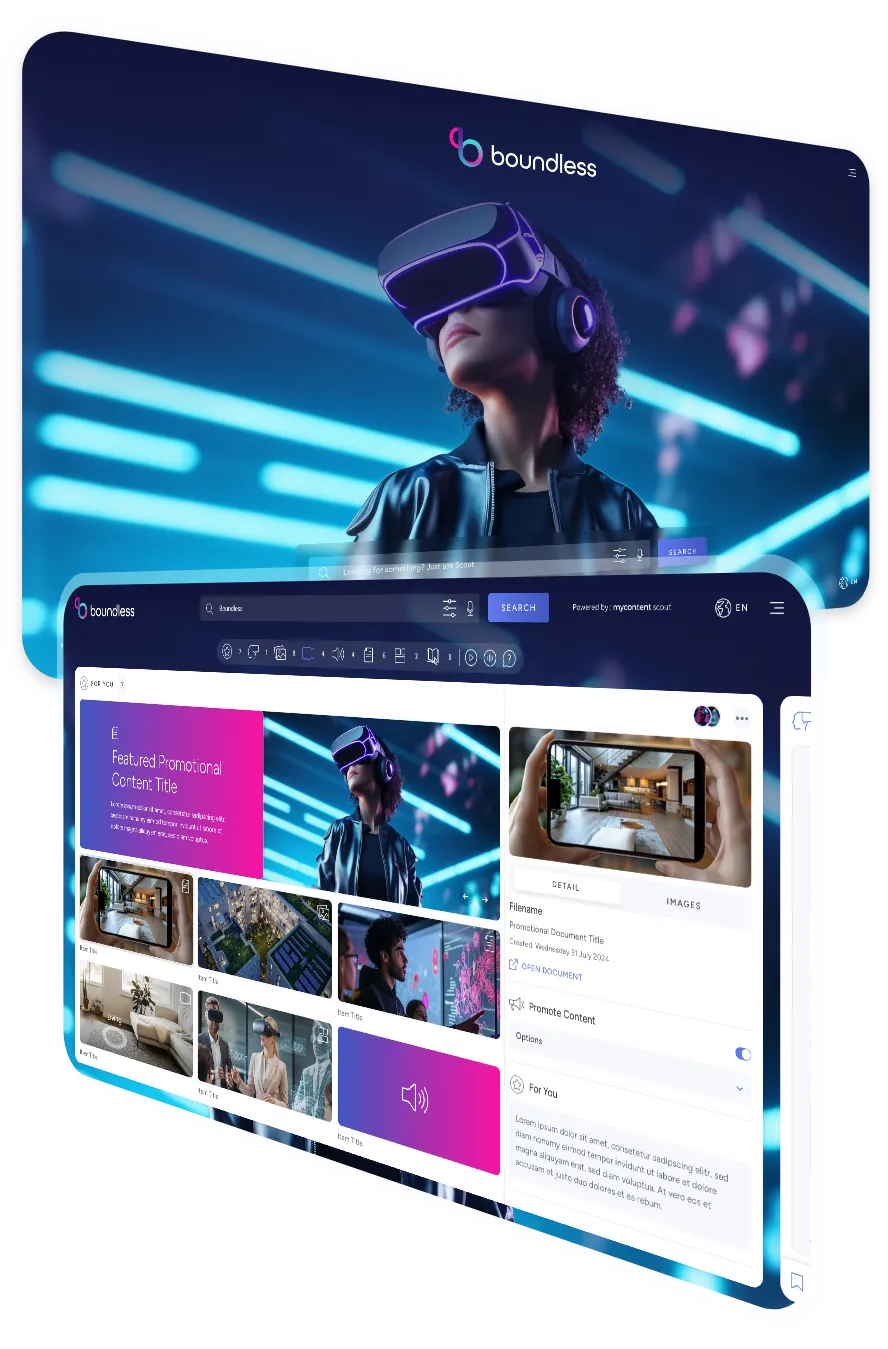
MyContentScout is built for exactly this point in the employee journey. By connecting to the knowledge that already exists across your organisation and making it searchable through a simple natural language question, Scout gives new starters the same access to answers that experienced colleagues have accumulated over years. Without the months of waiting. Without the invisible tax on the team.
It does not replace human connection or the value of a thoughtful induction. But it does solve the structural problem at the heart of the post-onboarding period: the moment when training ends, questions begin, and the only place to find answers is someone else's attention.
If you have just started somewhere new and you recognise this feeling the anxiety of not knowing where to find things, the worry that asking too many questions makes you look incapable please know that it is not you. The knowledge is almost certainly there. The problem is access, not ability.
If you manage new starters, or lead a team, or make decisions about how organisations welcome new people: the questions your new hires are asking are not a nuisance. They are a signal. They are telling you exactly where the gaps in your knowledge infrastructure are. Every repeated question is a gap that could be closed.
The training ending is not the finish line. For the new starter, it is the starting gun.
Share this with someone who manages new starters. Or with someone who has just started somewhere new.
Want to see how Scout closes the knowledge gap for new hires? Book a demo or explore our ROI calculator.





Get in touch with our team to arrange a demo of MyContentScout and see how it could transform your workflow with AI search, content analysis and categorisation, saving you time and providing smart insights from various sources.