
Every organisation has at least one person whose knowledge nobody else fully has. The colleague who knows why a process was set up a certain way, which client always needs extra handling, or how to fix the one recurring system issue that isn't in any manual. When that person resigns, retires, or is simply out sick for a week, that knowledge doesn't transfer with a handover document, because it was never written down in the first place.
This is tribal knowledge risk, and it's one of the quieter but more expensive problems in most organisations. It isn't a dramatic failure. It's a slow accumulation of inefficiency: new starters take longer to ramp up, the same questions get asked over and over, and institutional memory thins out a little more with every departure.
The scale of this problem is easy to underestimate because it rarely shows up as a single, visible event. It shows up as thousands of small frictions spread across a business, each one small enough to shrug off and never add up to a line item on a budget.
Panopto's Workplace Knowledge and Productivity Report, a study of over 1,000 US employees conducted with YouGov, found that 60 percent of employees find it difficult, very difficult, or nearly impossible to get the information they need from colleagues to do their job properly. The same research found that employees lose 5.3 hours a week waiting for information from colleagues or recreating knowledge that already exists somewhere in the organisation, just not somewhere they can find it.
That waiting and recreating has a price tag. Panopto's analysis puts the average cost to a large US business at around $47 million a year in lost productivity from inefficient knowledge sharing, split between slower onboarding and the everyday cost of people working without the information they need. Smaller organisations lose proportionally less in absolute terms, but the underlying mechanics are identical: knowledge that lives in one person's head is knowledge the rest of the business can't use.
The usual response to knowledge loss is "we need better documentation." It's the right instinct and the wrong solution on its own. People are busy, documentation goes stale within months of being written, and even when it does exist, it's often scattered across shared drives, old email threads, and recorded calls that nobody can search effectively.
There's also a harder truth underneath the practical one: a lot of tribal knowledge is genuinely difficult to write down. It isn't a fact so much as a judgement call, built up over years of handling edge cases. Asking someone to document "why we handle this client differently" or "how we quietly fixed that recurring system bug" assumes they can articulate something that, for them, has become instinct. Most people can't, not because they're unwilling, but because expertise this specific rarely gets consciously examined until someone asks the right question at the right moment, usually during an exit interview that's already too late.
This is why knowledge retention strategies built entirely around asking people to write more tend to stall. The knowledge base grows for a while after each big departure scare, then quietly stops being maintained until the next one.
It helps to be specific about what disappears, because "institutional knowledge" is vague enough to be easy to ignore. In practice, a departing employee usually takes three distinct things with them:
Context for decisions. Not just what a process is, but why it exists in its current form, including the failed attempts and edge cases that shaped it. Without that context, successors often "fix" something that was already deliberately built that way.
Relationship knowledge. Which clients need extra handling, which suppliers are reliable under pressure, which internal stakeholders need to be looped in early. None of this typically lives in a CRM field.
Workarounds. Every organisation has at least one system quirk or recurring issue that gets fixed the same way every time, by the same person, because nobody ever formalised the fix into a proper process.
None of these are exotic problems. They're ordinary, and that's exactly why they get missed until the person handling them is gone.
Voluntary turnover is only part of the picture. A large cohort of experienced employees is approaching retirement at the same time, and Deloitte's research on capturing institutional knowledge warns that organisations risk losing decades of accumulated expertise unless they actively capture it before those employees leave. The knowledge at risk here isn't just process detail. It's judgement built over an entire career, the kind that's hardest to replace and slowest to rebuild.
Deloitte's guidance points towards structured knowledge transfer, pairing retiring experts with successors well before their last day, rather than relying on a single handover document written in someone's final week. That's sound advice, but it depends on knowing which knowledge is at risk in the first place, and most organisations don't have visibility into that until it's already gone.
This is where the problem shifts from "we need to write more documentation" to "we need to capture what people already say and do." Most tribal knowledge already gets expressed out loud somewhere: in a training session, on a support call, in a recorded team meeting, in an offhand comment during a project review. The knowledge exists. It just isn't searchable, and it isn't connected to anything else.
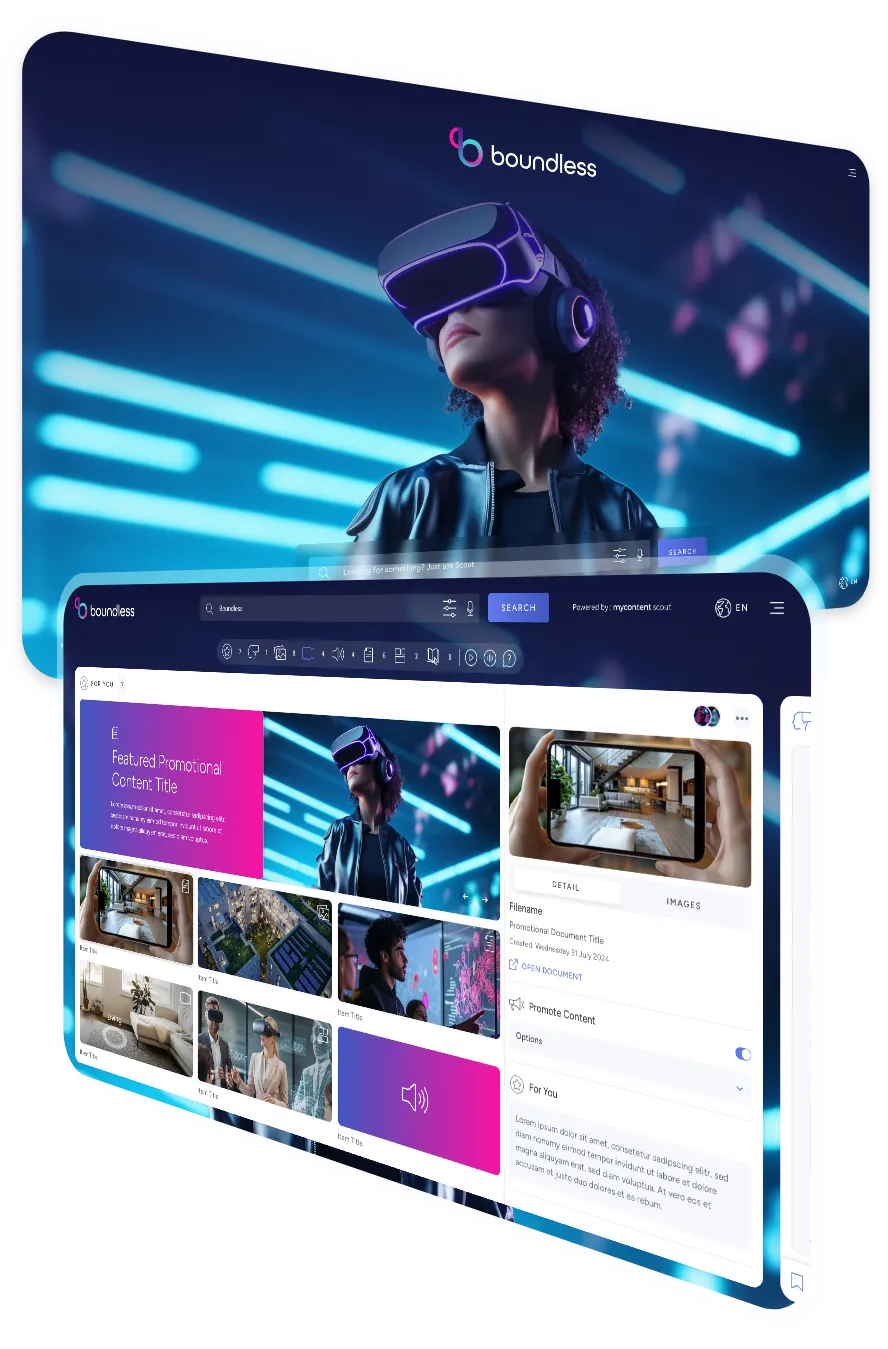
MyContentScout addresses tribal knowledge risk from that angle. Rather than asking people to document more, it makes everything that already exists, documents, recorded meetings, training sessions, calls, searchable and queryable. When someone resigns, their contributions to the knowledge base don't leave with them. A new team member can ask a question in plain language and get an answer drawn from years of accumulated institutional knowledge, not just whatever happens to be sitting in a handover note written under time pressure.
That changes the maths on onboarding too. New hires spend a meaningful stretch of their first months learning through trial, error, and interrupting busy colleagues rather than through structured knowledge transfer. A searchable knowledge base that captures tacit, spoken knowledge alongside written documentation shortens that stretch considerably, because the answer to "why do we do it this way" no longer depends on whether the one person who knows is available, or still employed.
It also changes what an offboarding process can realistically capture. Most exit checklists ask a departing employee to write down what they know in their final week or two, which is precisely when they have the least time and the least motivation to do it well. If that knowledge has already been captured passively, through the meetings they've sat in and the calls they've taken over their whole tenure, offboarding stops being a race against the calendar. There's no single handover document that has to contain everything, because the knowledge was never dependent on one document in the first place.
None of this is really about any individual employee. People are entitled to move on, retire, or take a week off without their organisation grinding to a halt in their absence. The goal isn't to prevent departures. It's to make sure the organisation's knowledge doesn't depend on any single person still being in the building.
Reducing reliance on any one person's memory isn't just risk mitigation for the day someone finally does resign. It makes the whole organisation more resilient and faster-moving day to day, because fewer questions have a single point of failure, and fewer answers depend on catching the right colleague between meetings.
Book a demo to see how MyContentScout can capture your organisation's tribal knowledge before it's at risk.





Get in touch with our team to arrange a demo of MyContentScout and see how it could transform your workflow with AI search, content analysis and categorisation, saving you time and providing smart insights from various sources.