.png)
Most internal knowledge bases are built the same way. Everything gets uploaded, everything gets indexed, and every user sees the same undifferentiated pile of documents, videos, and training materials regardless of their role, team, or what actually matters to them this week. Search works well once someone knows what to look for. The harder problem is the content nobody thought to search for because they didn't know it existed.
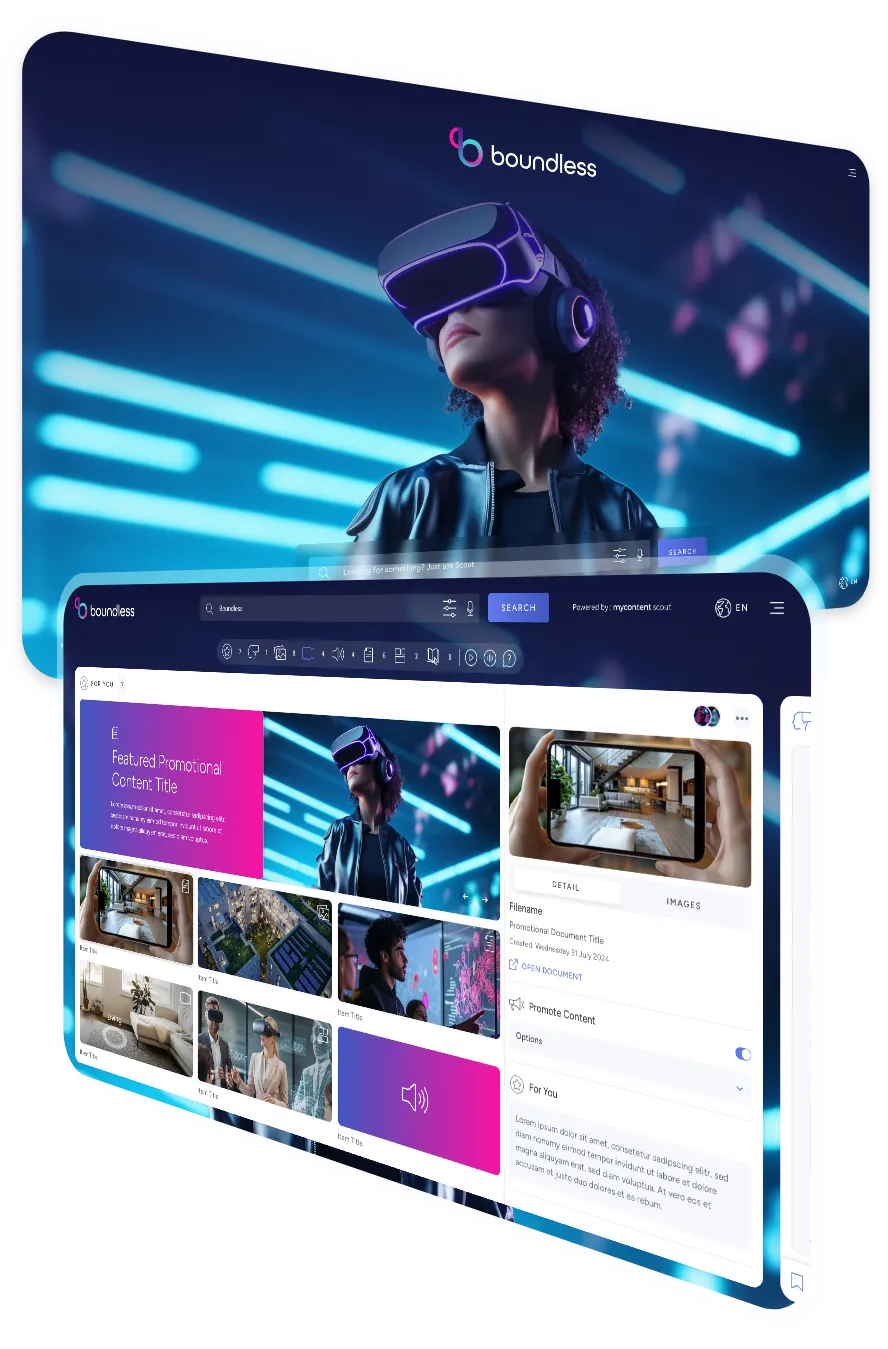
That's the gap the For You panel is designed to close. Rather than waiting for users to stumble across critical updates, it lets organisations actively push relevant content to the people who need it, surfacing it the moment they open the platform rather than leaving it to chance.

The scale of this problem is well documented outside knowledge management too. Gallup's research on workplace communication has repeatedly found that only around 13 percent of employees strongly agree that their organisation's leadership communicates effectively with the rest of the business. That's not a failure of effort. Most organisations communicate constantly, through email, intranets, town halls, and shared drives. It's a failure of relevance. When everyone receives the same undifferentiated stream of updates, the genuinely important ones get lost in the noise, and employees start tuning out entirely.
Inside a knowledge platform, the same dynamic plays out at a smaller scale but with the same result. A new safety procedure, an updated pricing sheet, a product training video for the launch happening next week: all of it sits in the same content library as thousands of other files, discoverable only if someone happens to search for the right term. The Deloitte research on organisational knowledge management found a notable difference between companies that treat knowledge sharing as a genuine priority and those that don't: 80 percent of employees at knowledge-focused organisations found it easy to retrieve information, compared with just 51 percent elsewhere. Search alone doesn't close that gap. Organisations also need a way to actively surface the content that matters, rather than relying entirely on employees to go looking for it.
Within MyContentScout, the For You panel gives content owners and administrators a direct route to their users' homepage. Instead of every document competing equally for attention inside the search index, teams can highlight specific content in a featured slider, ensuring the must-see material sits front and centre the moment someone logs in.
This matters most in scenarios where timing is everything. A compliance update needs to reach every relevant employee this week, not whenever they happen to search for it. A new starter benefits from being pointed towards onboarding material on day one rather than being left to find it themselves among a thousand other files. A regional sales team launching a new product needs the latest pricing and messaging pushed to them directly, not buried under two years of historical assets.
This is the difference between a passive content library and an active knowledge platform. Passive libraries assume users know what they're looking for. Active platforms recognise that a large part of the value in content delivery comes from surfacing the right thing before anyone has to ask.

The underlying logic here isn't unique to enterprise knowledge management. It mirrors what McKinsey's research on personalisation has found across customer-facing industries: message relevance is one of the strongest levers for engagement, and treating every audience identically produces measurably weaker results than tailoring content to who's actually receiving it. In a consumer context, that shows up as ignored emails and abandoned baskets. In an internal context, it shows up as employees missing policy updates, repeating questions that were already answered in a document they never saw, or simply defaulting to asking a colleague because searching has never reliably surfaced what they need.
The For You panel applies that same principle to internal knowledge. Rather than assuming every user has equal interest in every piece of content, it lets teams decide what specific groups need to see and put it directly in front of them. A technical team can be shown the latest engineering documentation without wading through HR policy updates. A customer service team can be pointed towards the newest troubleshooting guide the moment it's published, rather than discovering it three weeks later when a customer asks a question nobody can answer yet.
There's a secondary benefit here that content and L&D teams tend to notice once they start using the feature regularly: the For You panel becomes a mechanism for testing what actually lands. If a piece of featured content gets strong engagement, that's a signal worth acting on. If it doesn't, that's useful information too, whether the problem is the content itself, the framing, or simply that it wasn't relevant to the audience it was pushed to.
This turns content promotion into something closer to an ongoing conversation with users rather than a one-off publishing decision. Combined with search analytics, which shows what people are actively looking for, and the For You panel, which shows what happens when specific content is proactively surfaced, teams get a fuller picture of how their knowledge base is actually being used. Neither tool alone tells the whole story. Search analytics reveals demand that already exists. The For You panel reveals whether well-targeted supply can meet demand before employees even realise they have a question.
None of this replaces the core value of AI-powered search. Most of the time, users will still come to a knowledge platform with a specific question and expect an immediate, cited answer, which is the core function MyContentScout is built around. But search only works when someone knows to ask. The For You panel exists for everything else: the update nobody thought to search for, the resource that's genuinely time-sensitive, the piece of onboarding content that a new starter has no reason to know exists yet.
Together, the two approaches cover both sides of how people actually engage with knowledge at work. Sometimes they're looking for something specific and need an accurate answer fast. Other times, the organisation needs to make sure they see something important before they've even thought to look. A platform that only does the first misses a significant amount of value that gets left on the table simply because nobody knew to ask.
For organisations managing content across multiple teams, departments, or regions, that distinction matters. A featured slider that highlights genuinely important content, curated by the people who understand what each audience needs, does more to close the gap between "the information exists somewhere" and "the right person saw it when it mattered" than search functionality can achieve on its own.
Built by The Virtual Forge, MyContentScout combines both approaches: instant, cited answers when users search, and targeted, curated delivery when the organisation needs to make sure the right content doesn't go unseen.
See how MyContentScout brings search and targeted content delivery together and start making sure your most important content reaches the people who need it.





Get in touch with our team to arrange a demo of MyContentScout and see how it could transform your workflow with AI search, content analysis and categorisation, saving you time and providing smart insights from various sources.