

The deal has closed. The press release is out, the new logo is on the website, and on Monday morning two sets of staff log in as one company. They have two intranets, two expenses policies, two ways of onboarding a customer and two libraries of training videos explaining how things are done.
By lunchtime the questions start. Which holiday policy applies to us now? Who signs off a discount over 15%? Do we follow their process for new accounts, or ours? Most of these have answers somewhere. The trouble is that nobody on either side knows where the other company keeps them.
Mergers are hard to get right. A Harvard Business Review analysis by Clayton Christensen and colleagues put the failure rate for acquisitions somewhere between 70% and 90%. Post-merger integration plans tend to be thorough on systems, finance, people and brand. M&A knowledge management rarely gets its own line.
It falls between everyone's remit. IT moves the files, HR harmonises the policies and internal comms writes the announcements. But the everyday question "how do we do this here now?" belongs to no one, so staff answer it the slow way: by asking around.
The people who know are the most likely to leave. A study in the Strategic Management Journal compared employees who joined a company through an acquisition with similar people hired directly. Acquired employees left at a much higher rate, and the gap was widest for senior staff and for people in executive, technical, business development and sales roles. Wharton's Daniel Kim, studying startup acquisitions, found acquired workers were twice as likely to leave as comparable regular hires. If the acquired business's know-how lives in those people's heads, much of it can be gone within a year. We looked at the wider version of this problem in The Knowledge That Walks Out the Door When Someone Resigns.
Two sets of experts become one set of bottlenecks. In the first months, the handful of people who understand both organisations get every question. It's the go-to expert problem at double strength, arriving exactly when those people are busiest.
Silos survive the deal. Merging the org chart doesn't merge the content. Without a way to search both libraries at once, the two old companies carry on as data silos inside the new one, and staff fall back on what they already know.
These principles hold whatever tools you use.
Make both libraries searchable on day one, before you tidy them. Rationalising two sets of policies, guides and training takes months. People need answers now. Bringing both companies' content into one searchable place lets staff find what already exists while the harmonisation work carries on in the background.
Always show whose document it is. In a merger, the most important detail of an answer is often which company it came from. Every answer should link to its source, so a salesperson can see at a glance that the discount rule they've found is the acquired company's old policy.
Capture the spoken knowledge early. Much of what makes the acquired business work was never written down. It lives in recorded handovers, team briefings and training sessions. Asking key people to talk through how they work on camera, then making those recordings searchable, is one of the quickest forms of knowledge transfer available, and it doesn't depend on them staying.
Keep sensitive content restricted. For a while, some material should stay visible only to one side or to the integration team. Permissions need to follow your identity setup, so access changes as people move roles. Our guide to AI security and permissions sets out the questions to ask.
Push changes to the people they affect. When a joint policy replaces two old ones, the staff it affects should see it first rather than stumble across it weeks later.
Plan for languages. Cross-border deals add a language gap to everything else. Search that works across languages means a team in Lyon can ask in French and get an answer from a policy written in English, as we covered in Ask in Any Language, Get the Answer Wherever It Lives.
Enterprise AI search can't merge two cultures. It can remove one of the most frustrating parts of integration: not being able to find anything.
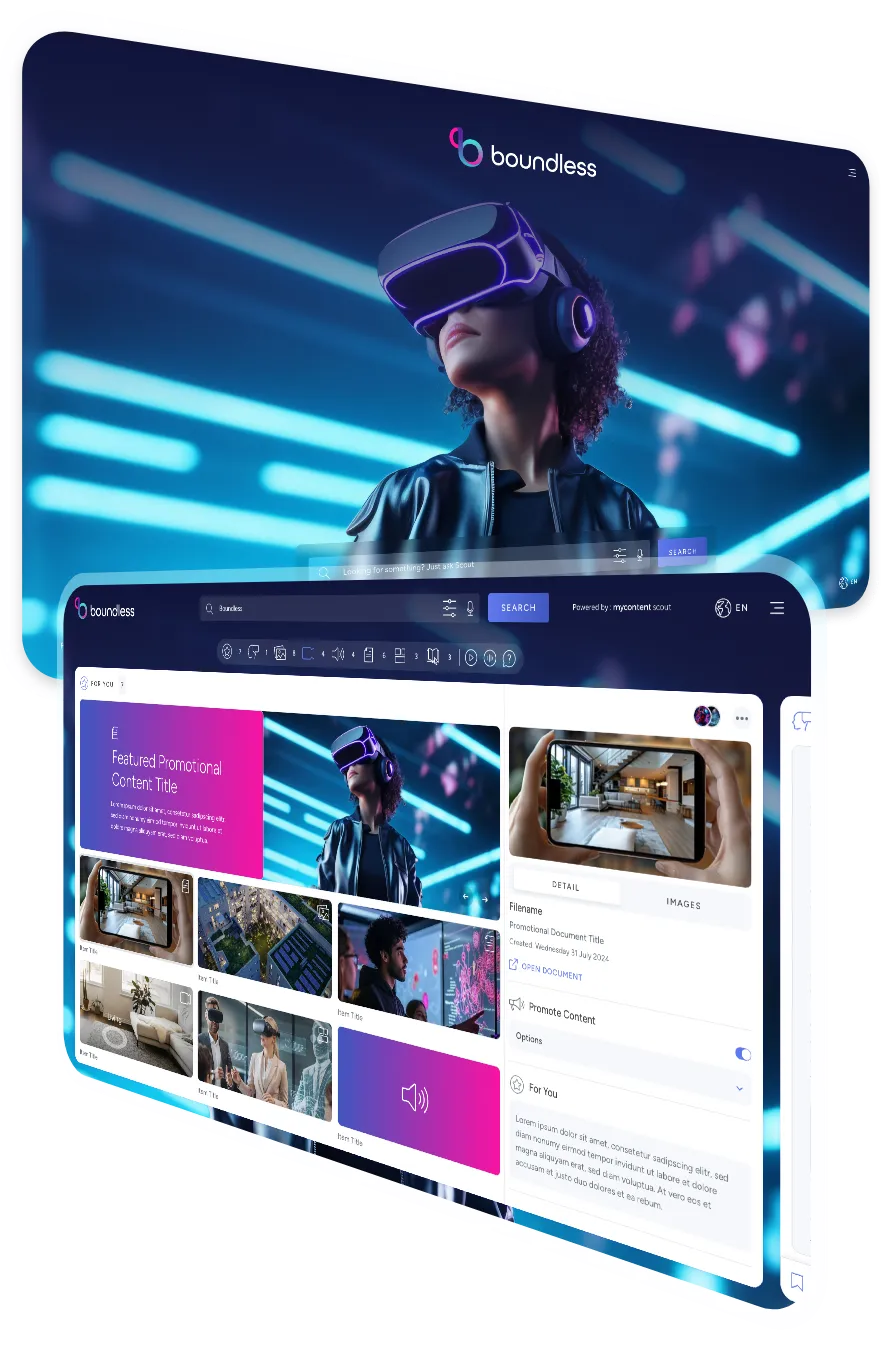
MyContentScout brings documents, videos, audio, images, eLearning and dashboards from both organisations into one platform. Staff ask questions in plain language and get an answer with its source attached, down to the page or the moment in a recording. Permissions can work with your identity management system or be set up directly. The For You panel lets you push key content to specific groups, such as the new joint policies to everyone joining from the acquired business. Multilingual search handles cross-border teams, and search analytics show what people on each side are looking for and not finding, which tells the integration team where the gaps are.
That's AI knowledge management applied to one of the most disruptive years in a company's life.
If you're planning a merger, or you're already in the middle of one, add one question to your integration checklist: on day one, how will someone from either company find out how things work now? If the honest answer is "they'll ask someone", that's a gap worth closing early.
See how it works with both companies' content. Book a demo or start a free 30-day trial with up to 1,000 pieces of content.




Get in touch with our team to arrange a demo of MyContentScout and see how it could transform your workflow with AI search, content analysis and categorisation, saving you time and providing smart insights from various sources.