
A prospect asks about a pricing exception. A customer wants to know if your product handles a specific edge case. An existing account asks whether a policy has changed since they last checked. The answer exists somewhere in your organisation, but not in the head of the person on the call. So they say the six words every customer-facing team leans on when they're stuck: "let me find out and get back to you."
It sounds professional. It buys time without admitting you don't know. But that phrase is also the start of a chain reaction most organisations never measure: a rep has to remember to chase the answer, someone internally has to be tracked down and pulled off their own work, the reply takes hours or days to land, and by the time it arrives the prospect has cooled off, the ticket has aged, or the moment has simply passed.
It isn't a training problem. Reps and support agents aren't failing to learn the product; they're working across too much of it. Pricing tiers change. Technical specs get updated. Policies get revised by legal or compliance without every team being looped in. No single person can hold all of that in their head, and the information that would answer the question is usually sitting in a document, a call transcript, a Slack thread, or a colleague's inbox rather than anywhere searchable.
This is really a knowledge management problem wearing a customer-facing costume. McKinsey Global Institute's research on workplace collaboration found that far more untapped value sits in improving how organisations share knowledge and communicate internally than most leaders assume, and a lot of that value sits precisely in the gap between a customer's question and the answer that already exists somewhere internally. The rep isn't the bottleneck. The retrieval system is.
In sales, the deferred answer is a sales cycle killer disguised as good customer service. A prospect who asks a pointed question is, by definition, engaged. They're close to a decision and looking for the detail that will confirm it. Every hour that passes before they get an answer is an hour where a competitor can reach them first, where their internal priorities shift, or where the momentum that got them to ask the question in the first place simply drains away.
Buyer expectations have only got less forgiving. Research summarised in Salesforce's sales statistics reporting shows a majority of consumers now expect near-instant responses when they reach out to a business, a figure that has been climbing year on year as AI-assisted tools condition people to expect immediate acknowledgment. A sales team that still runs on "I'll check and come back to you" is competing against that expectation with one hand tied behind its back, and every deferred answer chips away at deal velocity, not just at the individual deal in front of you.
Support and account management feel the same cost from a different angle. First-call resolution, or the lack of it, is one of the clearest predictors of whether a customer stays. Zendesk's own CX Trends research found that 86 percent of consumers say fast responses and accurate resolutions influence whether they buy, which means speed and accuracy aren't a nice-to-have layered on top of good support, they're the product itself as far as the customer is concerned.
The pattern compounds. Zendesk's own benchmark data has consistently found a clear correlation between slow response times and low customer satisfaction, and once satisfaction drops, the relationship rarely recovers on its own. A support agent who has to escalate internally, wait for a specialist to reply, and then circle back to the customer isn't just adding minutes to a ticket's resolution time. They're adding a second and third touchpoint where the customer's patience can run out, and a second and third opportunity for the answer to arrive slightly wrong, because it's now been relayed through someone's memory of what a colleague told them rather than pulled directly from source.

The financial cost of a deferred answer is real and measurable in resolution time, ticket backlog, and lost or delayed deals. But the less visible cost is trust. When a customer or prospect hears "I'll find out and get back to you," what they're actually learning is that this organisation doesn't have its own information readily available. That's a strange thing to reveal to someone you're trying to convince to buy from you or stay with you, because it raises a quiet, reasonable question: if you can't find this answer quickly now, what happens after I've signed?
This is also where tribal knowledge becomes a genuine liability rather than just an inconvenience. If the only fast route to an answer is knowing which colleague to ask, your customer experience depends on who happens to be online, who remembers the detail correctly, and who has time to reply. None of that is a system. It's luck, repeated daily, across every deal and every ticket, and it produces exactly the inconsistency and follow-up fatigue that erodes confidence over time, both for the customer waiting and for the rep who has to keep chasing colleagues instead of doing their own job.
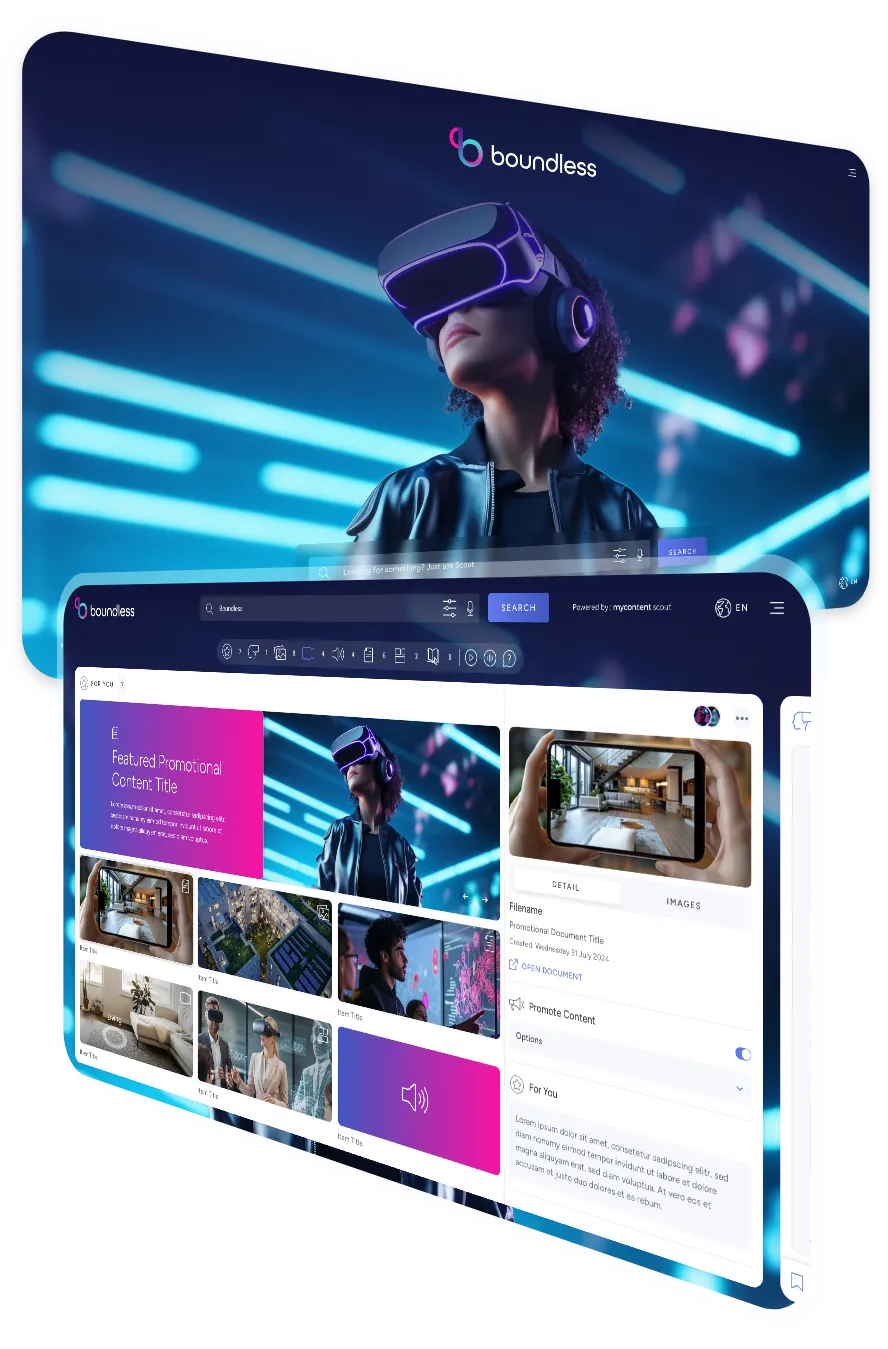
The fix isn't asking reps and support agents to know more. It's giving them a way to find the answer as fast as the customer asked the question, from content the organisation already has: product documentation, pricing sheets, policy updates, past call recordings, technical specs. That's the specific gap an AI knowledge platform like MyContentScout is built to close. Instead of a rep pinging a colleague and waiting, they can ask the platform the same question the customer just asked and get an answer in plain language, drawn from your organisation's own trusted content and backed by a citation showing exactly where it came from, whether that's a page in a document, a timestamp in a recorded call, or a line in a policy update.
That citation matters as much as the speed. A fast but unverifiable answer just moves the trust problem rather than solving it. A fast answer with a visible source means a rep can say "yes, and here's exactly where that's confirmed" in the same call, rather than promising to check and follow up. For sales, that keeps the conversation alive at the exact moment the prospect is engaged. For support, it turns a ticket that would have needed escalation into one resolved on first contact, which is precisely the metric that correlates most strongly with customer satisfaction.
If your team regularly says "I'll find out and get back to you," it's worth treating that phrase as a signal rather than a normal part of doing business. Track how often it happens, how long the follow-up actually takes, and what proportion of those deals or tickets go quiet afterwards. The pattern usually shows up faster than people expect, and it tends to point at the same root cause: the answer already exists somewhere in the organisation, it's just not reachable in the moment someone needs it.
Closing that gap doesn't require a bigger team or a longer script. It requires making your own knowledge as fast to retrieve as the question someone just asked you.





Get in touch with our team to arrange a demo of MyContentScout and see how it could transform your workflow with AI search, content analysis and categorisation, saving you time and providing smart insights from various sources.