
We've all typed it. "Sorry, I know you've told me this before, but..." Then we've looked at it, felt slightly silly, and deleted it.
Maybe it was the expenses process. A client's preferred file format. Which version of the pricing deck is the live one. You were told once, probably in your first few weeks, probably on a call where you were also trying to remember a dozen new names. It made sense at the time. Now it doesn't, and the person who explained it is in back-to-back meetings.
So you don't send the message. You make your best guess and carry on.
Nobody notices. That's the problem.

Most workplaces run on an unwritten rule. The first time you ask a question, you're being diligent. The second time, you start to worry you look like you weren't listening.
That feeling gets stronger the longer you've been in the job. New starters get a grace period. Nobody expects them to know where anything lives, and good employee onboarding builds in time for exactly these questions, as the CIPD's guidance on induction makes clear. Six months in, the grace period has quietly expired. Two years in, you're the person other people come to, and admitting you're unsure about something "everyone knows" feels like a small risk to your credibility.
So people find workarounds. They:
None of these feels like a big decision in the moment. That's exactly what makes them expensive.
Looking for information already takes a real slice of the working week. Research from the McKinsey Global Institute found that interaction workers, the knowledge workers, managers and professionals whose jobs revolve around communication and coordination, spend nearly a fifth of their week looking for internal information or tracking down colleagues who can help. That works out at roughly 1.8 hours a day, a figure we break down in The 1.8-Hour Problem.
That's the visible cost: time spent hunting. It's measurable, and most leaders can picture it.
The guess is the hidden cost. Nobody logs the moment someone decided not to ask. It surfaces later, in places that rarely get traced back to the original gap.
Rework. A proposal built on last year's template has to be redone when someone spots the outdated terms. The hours spent on the first version are simply lost.
Inconsistent answers to customers. Two people on the same team give a client two different answers about the same policy, because each is working from their own version of it. The customer doesn't see two well-meaning colleagues. They see a business that doesn't know its own rules.
Slower decisions. When people aren't sure, they hedge. They add caveats, wait for sign-off they don't need, or loop in a manager "just to check". This is how knowledge access problems turn managers into bottlenecks without anyone meaning them to.
Errors that surface weeks later. The most costly guesses are the ones that look fine at the time. A wrong figure in a report, a skipped step in an approval process, an old price quoted to a prospect. By the time it's spotted, the trail back to the original uncertainty has gone cold.
Add those together and the hidden cost of the unasked question can easily outweigh the time spent searching. It just never appears on a dashboard.
The obvious response is cultural. Tell people there's no such thing as a silly question. Put it on a slide at the all-hands. Make sure managers say their door is always open.
That matters, and the research supports it. Amy Edmondson of Harvard Business School introduced the idea of team psychological safety in a 1999 study of 51 work teams, published in Administrative Science Quarterly. The teams all worked at one manufacturing company. She defined it as a shared belief that the team is safe for interpersonal risk taking, and found it was linked to learning behaviour, such as asking questions, seeking feedback and talking openly about mistakes, which in turn was linked to team performance. Google's later research into team effectiveness, known as Project Aristotle, also singled out psychological safety as a key dynamic.
But psychological safety lowers the fear of asking. It doesn't remove the cost. Even in the most supportive team, asking a colleague means interrupting them. You're pulling someone out of their own work, and you know it. The busier or more senior that person is, the heavier the ask feels. In a remote or hybrid team, where every question becomes a message sitting in somebody's notifications, the bar is higher again.
A "just ask" culture still depends on one person spending their time and attention on someone else's question. People are sensible about that trade-off. They ration their asks, and the second ask is usually the first one to go.
So the fix can't only be about encouraging people to ask more. It also has to make asking cheaper.
The second question rarely goes unasked because people don't care. It goes unasked because the only place to ask it is another human being.
Change that, and the dynamic shifts. If someone can ask privately, as many times as they need, without interrupting anyone, the embarrassment goes and so does the guesswork.
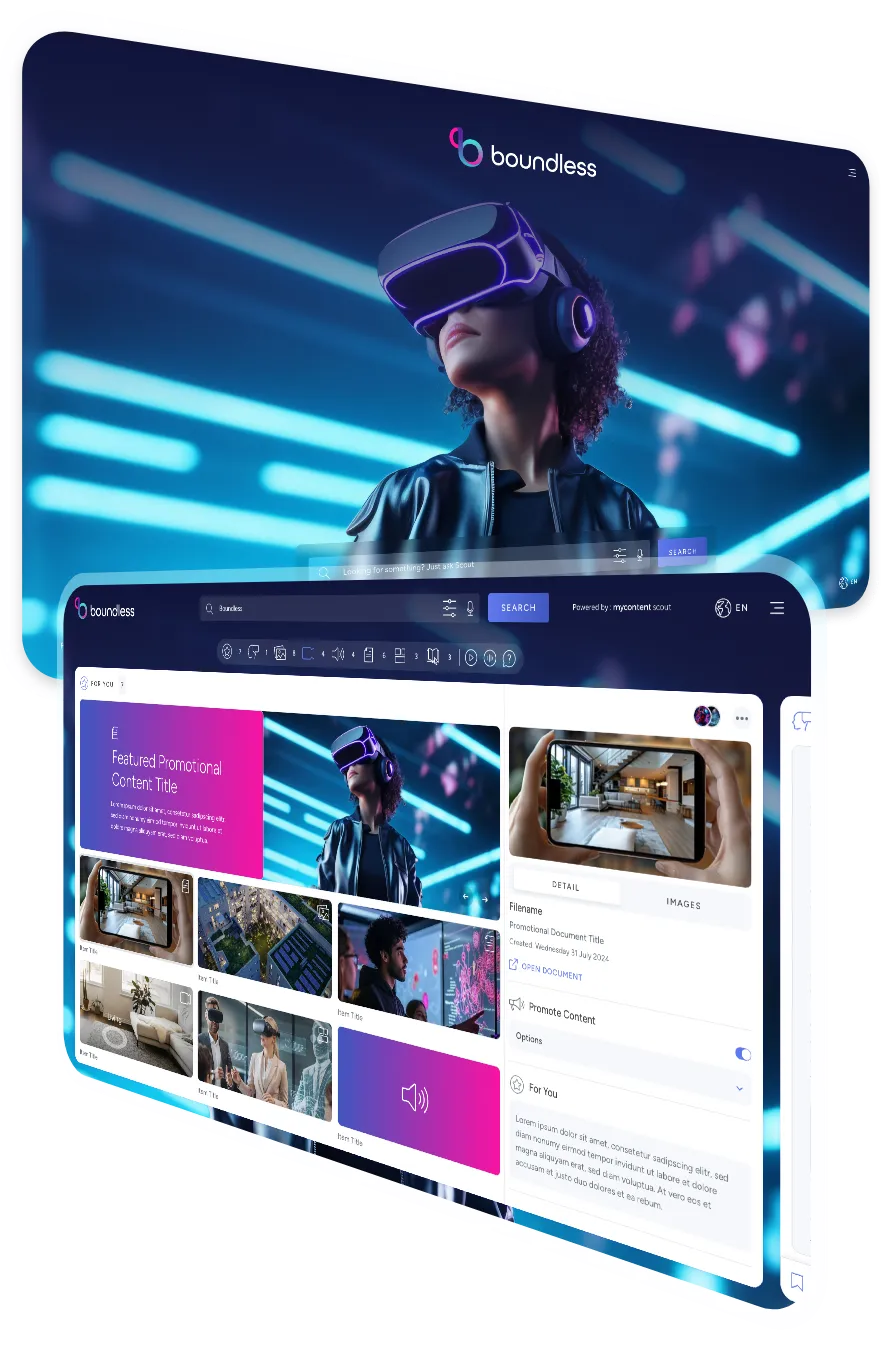
That's what MyContentScout is built for. It brings everything your organisation knows into one place, from documents and policies to recorded calls and training videos, so your team can ask a question in plain language and get a direct answer. Every answer is cited, pointing to the source page or the exact timestamp in a recording where the information lives.
That citation is what makes the difference. Unlike a guess, or a colleague's half-remembered answer, a cited answer can be checked. People can see where it came from and decide whether to trust it. If the source is out of date, that becomes obvious too.
And there's nobody to interrupt. Asking the same question a third time is no different from asking it the first time. Nobody is keeping count, and nobody is judging.
Traditional enterprise search hands back a list of documents and leaves you to dig. A platform that answers the question and shows its working turns finding information into a quick, private conversation. For teams that are too busy, too spread out or simply too polite to keep asking each other, it's a practical way to keep knowledge sharing going without leaning on the same few people.
There's a useful side effect. When people ask a platform rather than a colleague, the questions themselves become visible. MyContentScout's search analytics show which questions come up again and again, and where people struggle to find an answer.
A question that keeps being asked isn't a sign of a forgetful team. It's a sign that the answer isn't documented clearly enough, or isn't where people expect to find it. That gives you a practical knowledge management to-do list: rewrite the confusing policy, record the process properly, refresh the onboarding pack. Every fix removes a guess that was being made somewhere in the business, often by several people at once.
Over time, the gaps that used to cause rework and mixed messages get closed at the source, rather than patched one awkward message at a time.
"Sorry, I know you've told me this before, but..." is a perfectly reasonable thing to say. The trouble is that most people won't say it, however supportive their manager is, because asking a person always carries a small social cost.
The goal isn't to make your team braver. It's to make that bravery unnecessary. When the second, third and tenth question costs nothing to ask, people stop guessing, and the hidden costs that come with guessing start to shrink.
Curious how much knowledge friction is costing your team? Take our free 2-minute Knowledge Friction Assessment, or start a 30-day free trial of MyContentScout and see what your team asks when nobody's counting.





Get in touch with our team to arrange a demo of MyContentScout and see how it could transform your workflow with AI search, content analysis and categorisation, saving you time and providing smart insights from various sources.